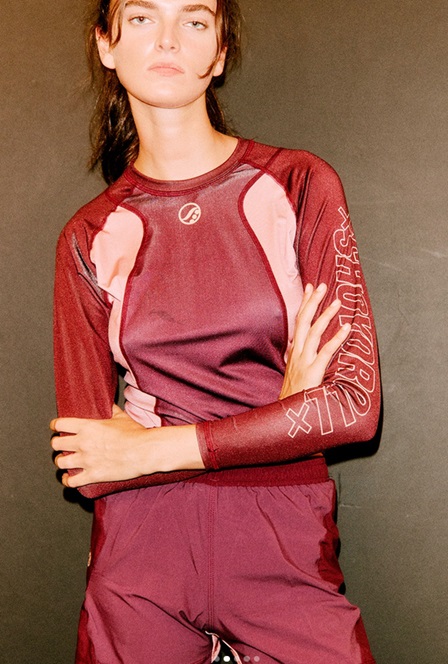
Shoyoroll has found itself at the center of widespread criticism after a recent Instagram campaign promoting its ROAN TVT rashguard sparked debate across the Brazilian jiu-jitsu community.
For those unaware, The “Roan TVT” is a limited edition Rashguard (specifically, a competition-ready gear item) created by the popular Brazilian Jiu-Jitsu brand Shoyoroll, which makes the seemingly bra-less advertisement even more strange.
The campaign, which featured a model appearing to wear the rashguard without a sports bra, quickly drew negative attention from an abundance of women on Instagram who argued the imagery failed to represent the realities of training and instead relied on unnecessary sexualization to market the product. One female MMA fighter commented “Bethany looks extremely unhappy. I’d be unhappy too if I were part of this ad” under the post.
Much of the criticism centered on authenticity. Female practitioners pointed out that wearing a rashguard without proper support is not representative of how women train or compete in Brazilian jiu-jitsu. As a result, many questioned whether the campaign was designed to appeal to the sport’s athletes or simply to generate attention through provocative imagery. If this is true, it has certainly worked well for the brand.
The design and fit of the rashguard also became a talking point. Several members of the community noted that the garment appeared noticeably loose, contrasting with the compression-style fit typically expected from rashguards used during live training. Many argued that the product, as presented in the campaign, did not reflect the functionality athletes look for in performance apparel.
The timing of the campaign also contributed to the backlash. Over the past several years, Brazilian jiu-jitsu has faced increased scrutiny following a number of high-profile misconduct cases involving instructors and gym owners. Against that backdrop, many practitioners felt that marketing which appeared to sexualize women within a training context was particularly ill-judged and out of touch with ongoing conversations about creating a safer and more welcoming environment for female athletes.
The response on social media was overwhelmingly critical, with many members of the community expressing disappointment that one of the sport’s most recognizable brands chose a direction they felt misrepresented women’s participation in jiu-jitsu. Rather than showcasing female athletes actively training or competing, critics argued the campaign prioritized attention-grabbing visuals over authenticity.

A freelance journalist with more than seven years of experience covering a wide range of topics, with a focus on delivering accurate, engaging, and well-researched reporting. He studied at the University of Birmingham, where he developed a strong foundation in journalism and communications. Martin is a 10th Planet BJJ brown belt and has been training for approximately 10 years and a keen follower of submission grappling.