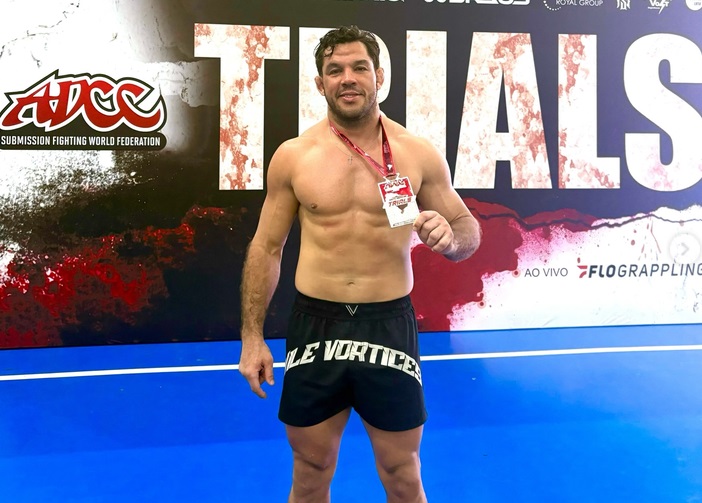
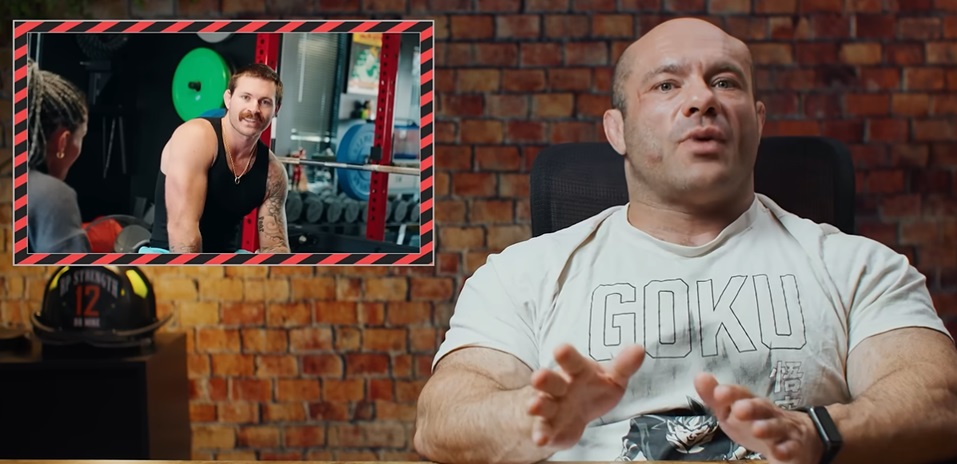
Dr. Mike Israetel, an exercise and sport science professor, competitive bodybuilder, and BJJ black belt, released a new breakdown of Gordon Ryan’s training methods, offering a scientific take on how the sport’s most dominant no-gi competitor builds his game. The video mixes footage of Ryan training with Israetel’s commentary on programming, physique development, and the ongoing debate over performance-enhancing drugs in grappling.
Ryan trains jiu-jitsu twice a day, Monday through Friday, with a single session on weekends, plus four weekly lifting sessions. Israetel called this schedule close to ideal for a tier-one competitor. Two two-hour sessions, spaced with an 8 a.m. and 1 p.m. start, let Ryan rack up the volume needed to build technical skill while still leaving enough recovery time before the next morning’s session. Cramming that same volume into one long block, Israetel argued, would mean the back half of the session would diminish your technical ability.
On lifting, Israetel noted that four sessions a week tends to be the ceiling for combat athletes, enough to build size and strength without eating into recovery needed for the sport itself. He was equally clear about the hierarchy: jiu-jitsu volume always comes first, and strength training supports it.
Ryan’s strength coach, Natalia Santoro, a former professional bodybuilder and Arnold Classic champion, trains him in a hypertrophy style, using higher rep ranges, partials, and drop sets rather than an Olympic lifting or powerlifting template. Israetel said this approach makes sense for grappling because muscle cross-sectional area is a primary driver of strength in the sport, and jiu-jitsu itself teaches that muscle how to apply force correctly. He was also blunt about which muscle groups matter most, arguing that upper-body strength, meaning grip, pulling, and pushing power, carries far more weight in grappling than leg strength, since most of jiu-jitsu’s physical demands run through the arms, back, chest, and shoulders.
The video also touched on Ryan’s long-standing gastrointestinal problems, which have forced modifications to basic lifts like bent-over rows and bench press. Israetel pointed out that certain positions and movement patterns aggravate Ryan’s nausea and reflux, requiring his coaching team to adapt his lifting program around the condition, something Israetel called remarkable given Ryan has remained the sport’s dominant competitor while managing it.
The video’s central talking point was Ryan’s claim that he could have reached the top of the sport without steroids, while still maintaining that PEDs help athletes hit their physical ceiling. Israetel offered a partial endorsement, agreeing that steroids aren’t a prerequisite for jiu-jitsu success specifically, while acknowledging they help across most other strength and physique sports.
His reasoning centered on how technical the sport is. In his assessment, added muscle or aggression from PEDs matters little if an athlete lacks the technical base to use it, and an athlete who can’t grapple will simply gas out against a more skilled opponent regardless of what they’re taking. He ranked steroids below basic strength training in terms of their impact on grappling performance, arguing that a session of lifting weights does more for a grappler’s game than steroid use would. Applied to Ryan specifically, Israetel argued the claim holds up especially well, since Ryan’s game is built on technical sequencing and setups, and is arguably less muscle-reliant than some of his most physical rivals.
Israetel closed the video by rating Ryan the GOAT of grappling in his own informal exercise science rating system, praising both his training structure and his technical foundation as the real drivers of his success, separate from his physique.

A freelance journalist with more than seven years of experience covering a wide range of topics, with a focus on delivering accurate, engaging, and well-researched reporting. He studied at the University of Birmingham, where he developed a strong foundation in journalism and communications. Martin is a 10th Planet BJJ brown belt and has been training for approximately 10 years and a keen follower of submission grappling.