
If you’ve ever wondered why so many of jiu-jitsu’s greatest competitors are still winning world titles well into their late 30s, Gordon Ryan has a theory and it comes down to physiology, not just experience.
Isometric Strength vs. Explosive Power
Ryan’s argument starts with a simple distinction between how different combat sports use the body. Wrestling, MMA, and boxing are all built around explosiveness, the ability to generate fast, powerful bursts of force. Jiu-jitsu, by contrast, is built around isometric tension: controlling, pressuring, and holding positions rather than exploding into them.
Because grappling doesn’t rely on the same fast-twitch explosiveness that fuels striking and takedown-heavy sports, Ryan believes the athletic prime for a grappler simply arrives later in life. He’s pointed out that isometric strength itself tends to peak around age 40, and that grapplers can maintain strong cardio well into that window too, a combination that pushes the jiu-jitsu peak years beyond what you’d expect in a sport like wrestling or MMA.
The Case Study: Andre Galvão
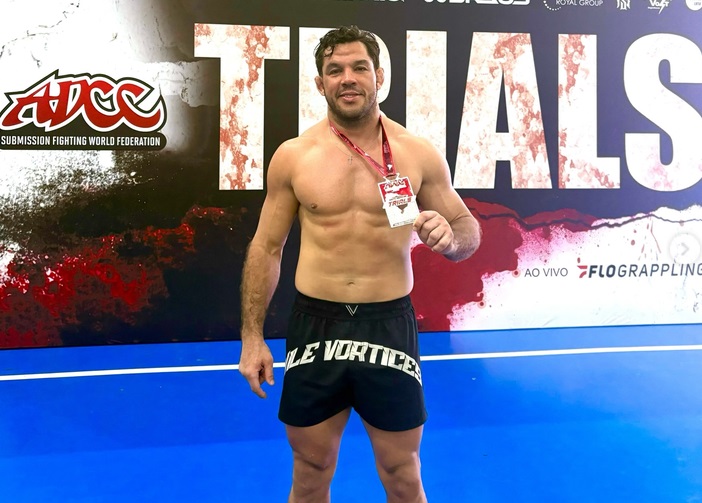
Ryan has used Andre Galvão as his go-to example. In his view, Galvão’s best performance came at the 2019 ADCC World Championship, when Galvão was around 38 years old. Ryan has said Galvão was still nearly as good when the two of them competed, Galvão was 40 at the time, but not quite at the level he was at when he beat Felipe Pena.
What made 38-year-old Galvão so dangerous, according to Ryan, wasn’t just experience. It was that he was physically bigger than he’d ever been, his cardio had improved, and years of additional technical development had sharpened his game in ways a younger, more athletic version of himself simply hadn’t reached yet.
Ryan’s Own Prime: Ages 35–40
Based on that reasoning, and Galvão’s example specifically, Ryan has placed the grappling peak somewhere between 35 and 40 years old. It’s a window he’s planning around for his own career. Provided his surgeons Sonny and John are around when he needs them and his body holds up, he’s said he intends to keep competing until he turns 40, with the years between 35 and 40 representing the competitive window he’s most looking forward to.
Why This Matters for Grapplers
Ryan’s theory offers a useful reframe for anyone training jiu-jitsu long-term. In explosive sports, athletes often have to make peace with a relatively short competitive window before speed and power decline. Jiu-jitsu, if Ryan is right, works differently: technical development, positional understanding, and physical durability can keep compounding for years longer, because the sport doesn’t demand the same short-burst athleticism.

A freelance journalist with more than seven years of experience covering a wide range of topics, with a focus on delivering accurate, engaging, and well-researched reporting. He studied at the University of Birmingham, where he developed a strong foundation in journalism and communications. Martin is a 10th Planet BJJ brown belt and has been training for approximately 10 years and a keen follower of submission grappling.