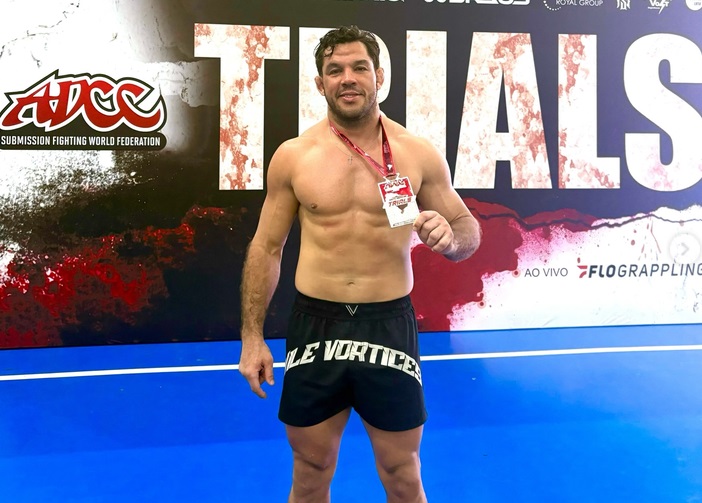
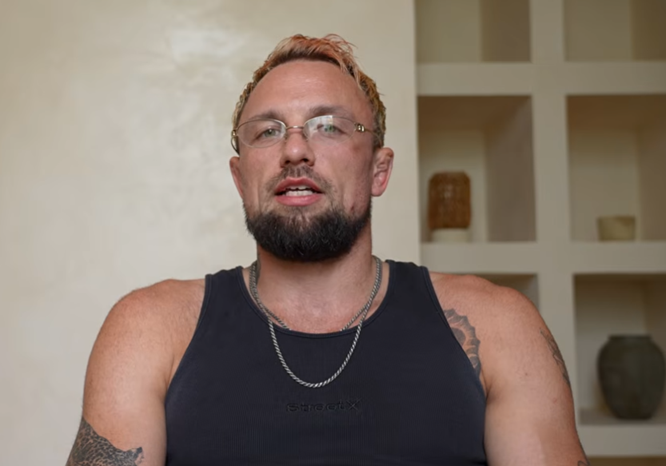
Craig Jones has published a lengthy video investigation detailing a series of allegations against Brazilian jiu-jitsu coach and civil police investigator Melqui Galvão, ranging from the killing of an unarmed man during a police operation to accusations of sexual abuse involving multiple young athletes from a social project he ran in Manaus, Brazil.
Jones says he began looking into Galvão expecting “a sadly familiar story” of misconduct in the sport, but found the allegations went far beyond that, including links to an unsolved 2007 murder, a fatal 2011 police shooting, and claims that Galvão used a youth jiu-jitsu program to abuse children over a period of more than 13 years.
The 2011 killing of Fernando Pontes
The video opens with the case of Fernando Pontes, a 25-year-old father of two who was killed in his home in President Figueiredo, in Brazil’s Amazonas state, on May 12, 2011. A police unit known as the Grupo Ferro carried out what was described as a search-and-seizure operation. Officers said Pontes resisted; footage recorded by a member of the public prosecutor’s office and later aired on Brazilian television reportedly shows Pontes was unarmed when he opened his bedroom door, and that no weapon was visible on the bed in the moments after he was shot. A weapon appears in the footage only minutes later, according to the video.
Four people were charged in connection with the case and two were arrested, but according to Jones’s reporting, no one was ultimately held accountable, two of the officers involved were later promoted. Pontes’s widow, Ariana, and his daughter, Dyemille, have spent the years since publicly seeking accountability. In 2022, eleven years after the shooting, one of the officers involved was reportedly given a certificate of honor by the same police force.
A promotion, a scandal, and a chain of command
The video ties the Pontes case to a wider controversy inside the Amazonas civil police. Mário Nunes was the police chief at the time of the shooting; his son, Cesar Nunes, had failed the exam required for promotion to delegado (a rank allowing him to lead investigations) before it emerged that his father had altered his and four other candidates’ test results. The scandal led to Mário Nunes’s resignation as police chief. Jones’s reporting notes that Cesar Nunes, only months after being promoted, commanded the operation that ended in Fernando Pontes’s death, raising questions about the independence of the ensuing investigation.
The social project
In 2011, the same year Pontes was killed, a Manaus police investigator started a jiu-jitsu program for children from vulnerable communities, named after a local student who had died in street violence. The program trained young athletes for free and, over time, produced world champions, drawing praise within the jiu-jitsu community as a rare success story to come out of the Amazon.
That investigator was Melqui Galvão one of the two officers arrested in connection with the Pontes killing, and, according to Jones, the officer who admitted to firing first. Records cited in the video indicate Galvão remained on police salary even as the program expanded to a second location in São Paulo, thousands of kilometers away.
Allegations of abuse
Several women who trained in the program as children have since come forward. According to their accounts relayed in the video, Galvão offered free training, kimonos, registration fees and even school scholarships to children from families who could not otherwise afford them before later telling them the support came with a price. Multiple women allege they were sexually abused by Galvão beginning when they were as young as 12, with one saying she stayed silent for 14 years after Galvão allegedly told her she would not be believed because he was a police officer.
His son’s account
Galvão’s son, Mica Galvão one of the most accomplished grapplers in the sport published his own 20-minute video in May 2026 describing a childhood marked by violence in the household, including being struck hard enough to draw blood and, at 14, being threatened with a knife and a gun. Jones’s report is explicit that there is no evidence or allegations that Mica Galvão was involved in any of the alleged criminal conduct attributed to his father; he is described in the video as a witness to the environment he grew up in. Mica’s partner, Olympic wrestling champion Amit Elor, also released a statement describing the household as one of fear, extreme control and intimidation, and voiced support for the women who have come forward.
An incident in Rome
The video also describes an allegation from February 2026, when a 17-year-old athlete travelling with her team to compete in Rome said she woke up in a car to find Galvão’s hand under her shirt. According to messages and an audio recording obtained by the young woman’s family and referenced in the video, Galvão apologized for the incident, acknowledged nothing could justify his behavior, and allegedly attempted to negotiate her continued silence, including references to helping arrange documentation for family members to move to the United States. Investigators who reviewed the case say Galvão used his position as a police officer, and his access to a firearm, to instill fear in victims and discourage complaints. As of the video’s release, investigators say they have identified and interviewed at least two additional alleged victims beyond those named publicly.
Arrest and witness-tampering allegations
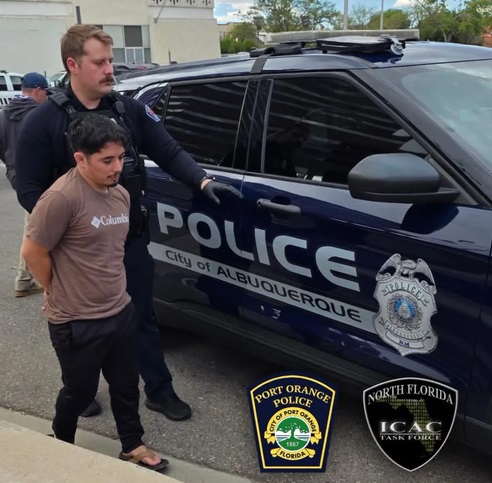
An arrest warrant was issued in São Paulo on April 23, 2026, and Galvão surrendered to authorities in Manaus five days later. Searches of properties linked to him reportedly turned up phones, computers and a firearm.
The video alleges that after four days in custody, Galvão’s brother, Enoque, also a civil police officer, provided him with a cell phone, which was allegedly used to pressure a witness into recanting testimony. That witness declined to comply and has since been added to the list of alleged victims in the case.
On May 7, 2026, Galvão was transferred to a prison roughly 2,000 kilometers away in São Paulo. A court ordered his continued detention on May 26 citing witness interference, and that same day Enoque Galvão was arrested in Manaus and charged with offenses involving two girls from the same jiu-jitsu program. A second phone was allegedly seized from Galvão’s cell on June 25, again reportedly linked to attempts to interfere with witnesses.
According to the video, nine women have now filed police reports against Galvão. His lawyers have since sought house arrest.
The unsolved murder of Sarah Lima D’Souza
The video also revisits the 2007 murder of Sarah Lima D’Souza, Galvão’s first wife and the mother of his daughter. In 2006, D’Souza reportedly went to police with a handwritten note describing threats her husband had made against her, threats her daughter also witnessed. She was shot dead outside her home on August 11, 2007, in front of that daughter. The officer who led the murder investigation was Mário Nunes, the same police chief later tied to the Fernando Pontes case through his son. No one has ever been charged in connection with D’Souza’s death.
Legal review before publication
Jones states that before releasing the video, he consulted Brazilian attorney Helen Gambary, who represents several of the women involved in the ongoing proceedings, to identify information that should not be published while the criminal case is before the courts. Galvão’s first pre-trial hearing is scheduled for October 20, 2026.

A freelance journalist with more than seven years of experience covering a wide range of topics, with a focus on delivering accurate, engaging, and well-researched reporting. He studied at the University of Birmingham, where he developed a strong foundation in journalism and communications. Martin is a 10th Planet BJJ brown belt and has been training for approximately 10 years and a keen follower of submission grappling.