Mixed martial arts has evolved dramatically since the early days of the UFC, but one thing has remained remarkably consistent: chokes continue to be the most effective way to finish fights by submission.
While joint locks and leg attacks have become increasingly sophisticated, chokeholds account for the overwhelming majority of submission victories inside the Octagon. So which chokes have been the most successful throughout UFC history?
Let’s take a detailed look at the numbers.
Rear Naked Choke: The Undisputed King
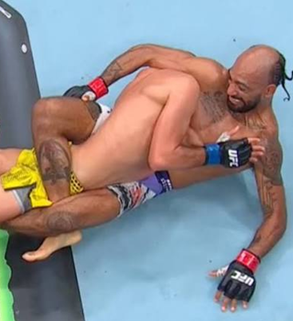
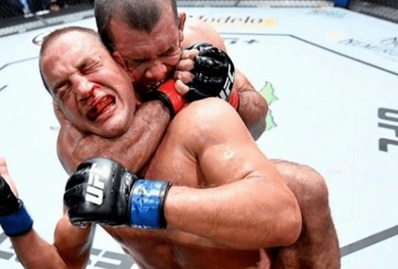
If there’s one submission that defines MMA, it’s the Rear Naked Choke (RNC).
Historical UFC data shows that the Rear Naked Choke accounts for roughly 40% of all submission victories in the promotion’s history—more than double the total of the second-most common submission.
This dominance isn’t surprising.
Once a fighter secures back control, they have one of the safest and most dominant positions in MMA. Unlike many submissions that require creating space or sacrificing position, the rear naked choke allows a fighter to maintain control while methodically working toward the finish.
Several legendary submission specialists have built their careers around the technique, including:
- Charles Oliveira
- Demian Maia
- Nate Diaz
- Matt Hughes
- Kenny Florian
The Rear Naked Choke succeeds because it combines positional dominance with relatively low risk.
Guillotine Choke: The Front Headlock Specialist
The Guillotine Choke has consistently ranked as the second-most common submission in UFC history.
Across thousands of UFC bouts, it accounts for approximately 18% of all submission finishes.
Its popularity stems from its versatility.
A guillotine can be applied:
- During a failed takedown attempt
- In scrambles
- From standing
- During guard exchanges
- Against opponents who expose their neck while wrestling
Modern MMA has also seen numerous variations emerge, including:
- High-elbow guillotine
- Arm-in guillotine
- Power guillotine
- Marcelotine-style finishes
Elite grapplers continue to refine the position, making it one of the most dangerous front-headlock attacks in the sport.
Arm Triangle Choke
Although it doesn’t receive as much attention as the Rear Naked Choke or Guillotine, the Arm Triangle has quietly become one of the UFC’s highest-percentage submissions.
It represents nearly 8% of all submission victories in UFC history.
The technique is especially common among wrestlers who excel at:
- Passing guard
- Maintaining top pressure
- Advancing to mount or side control
Unlike many submissions, the Arm Triangle allows fighters to finish while staying in complete control of their opponent.
Triangle Choke
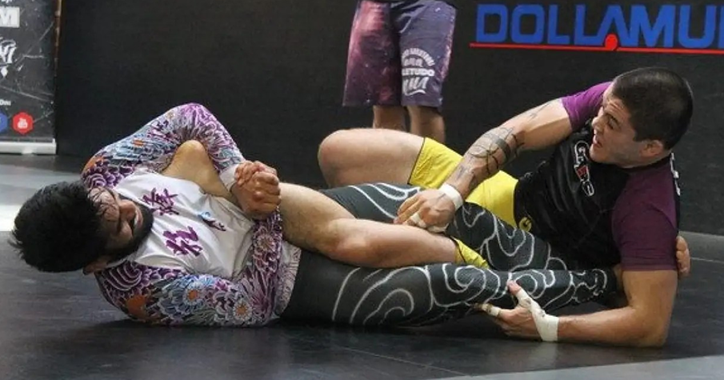
The Triangle Choke is one of Brazilian Jiu-Jitsu’s signature techniques, but its use in modern MMA has declined.
Historically, it still ranks among the UFC’s five most successful submissions, accounting for roughly 6% of submission victories.
Early UFC stars such as Royce Gracie and later champions like Anderson Silva helped popularize the technique.
However, today’s fighters are generally more reluctant to attack from the bottom due to improvements in wrestling, ground-and-pound, and positional awareness. Recent analyses have highlighted a noticeable drop in triangle finishes across major MMA promotions.
D’Arce Choke
Once considered a niche submission, the D’Arce Choke has become increasingly common over the last decade.
It now represents nearly 3% of UFC submission finishes, making it one of the most successful front-headlock attacks after the guillotine.
The D’Arce is particularly effective because it:
- Punishes failed takedowns
- Fits naturally into modern scrambling exchanges
- Works well against opponents attempting to turtle
Many elite grapplers use it as part of a complete front-headlock system.
Anaconda Choke
The Anaconda Choke appears less frequently than the D’Arce but remains a dangerous weapon.
Accounting for roughly 2–3% of UFC submissions, it is often seen after sprawling on takedowns or transitioning from front headlock control.
The submission became especially well known thanks to fighters like Antônio Rodrigo Nogueira and Charles Oliveira, who showcased its effectiveness at the highest level.
Why Do Chokes Dominate MMA?
Several factors explain why choke submissions consistently outperform joint locks.
1. They Work Regardless of Size
A properly applied blood choke cuts off circulation to the brain rather than relying on pain compliance.
This allows smaller fighters to submit significantly larger opponents.
2. Gloves Don’t Reduce Their Effectiveness
Unlike many grip-dependent submissions, most chokes remain highly effective despite MMA gloves.
Back control, front headlock control, and top pressure all translate naturally into cage fighting.
3. Positional Control Comes First
The majority of successful chokes begin from dominant positions such as:
- Back control
- Mount
- Side control
- Front headlock
Because these positions already limit an opponent’s movement, finishing the submission becomes considerably easier.
UFC’s Most Common Choke Submissions
Based on historical UFC statistics, the leading choke techniques are:
| Choke | Approximate Share of UFC Submission Wins |
|---|---|
| Rear Naked Choke | ~40% |
| Guillotine Choke | ~18% |
| Arm Triangle Choke | ~8% |
| Triangle Choke | ~6% |
| D’Arce Choke | ~3% |
| Anaconda Choke | ~2–3% |
Together, these six submissions account for the vast majority of choke finishes seen inside the Octagon.
What This Means for BJJ Practitioners
Interestingly, UFC statistics reinforce what many Brazilian Jiu-Jitsu coaches teach from day one.
The highest-percentage submissions generally come from dominant positions—not flashy or low-percentage attacks.
If your goal is to become more effective in either sport grappling or MMA, prioritizing these submissions is likely to produce the greatest return:
- Rear Naked Choke
- Guillotine Choke
- Arm Triangle
- D’Arce Choke
- Triangle Choke
These techniques consistently appear at every level of competition because they combine sound mechanics, positional control, and a high finishing rate.