
There are few modern examples that better connect Brazilian Jiu-Jitsu and mainstream cinema than Babs Olusanmokun. To many in the grappling world, he is not just an actor in Dune—he is a long-time black belt and respected practitioner whose path runs directly through the mats of New York into some of the biggest film sets in Hollywood.
His journey is a rare blend of combat sport discipline and artistic performance, showing how deeply martial arts can shape both physical ability and presence on screen.
A life grounded in Brazilian Jiu-Jitsu
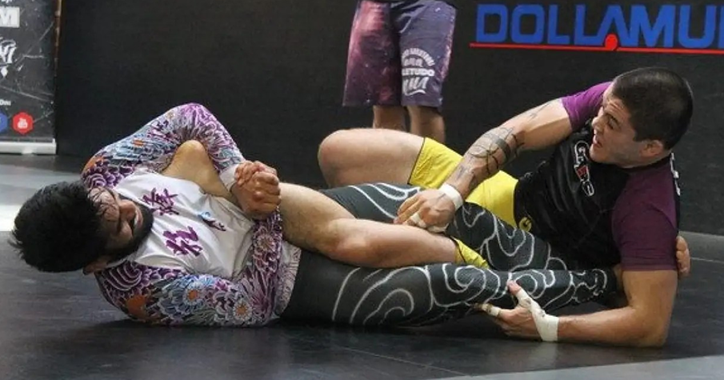
Before appearing in blockbuster films, Babs Olusanmokun built his foundation in Brazilian Jiu-Jitsu. He is widely recognized as a black belt under Fabio Clemente and the Alliance NYC lineage, and spent years training and competing in one of the most competitive grappling environments in the world.
In the New York BJJ scene, he wasn’t just another hobbyist actor training on the side—he was fully embedded in the culture of high-level grappling. Training in that environment means constant live resistance, technical refinement, and exposure to some of the best competitors in the United States.
This level of immersion is what gives his movement and fight credibility on screen. It’s not choreography learned in isolation—it’s built on thousands of hours of sparring.
From grappler to actor
Like many in New York’s creative circles, Olusanmokun’s path into acting developed alongside his life on the mats. He began appearing in film and television roles, gradually building a career that balanced performance work with his martial arts identity.
What sets him apart from many “martial arts actors” is that his primary base was never performance fighting—it was real grappling. That difference shows in how he carries himself in physical scenes: controlled, economical, and grounded rather than flashy.
Over time, he transitioned into more prominent roles in both film and television, including appearances in Star Trek: Strange New Worlds and various independent films.
Jamis in Dune: a fighter’s role
His breakout mainstream recognition came with Denis Villeneuve’s Dune, where he portrayed Jamis, the Fremen warrior who challenges Paul Atreides in ritual combat.
That fight is one of the most important moments in the first film. It is not just a battle—it is a cultural and spiritual trial within the Fremen way of life. Jamis serves as both an antagonist and a catalyst for Paul’s transformation.
For grapplers watching closely, the fight carries a distinct realism in its clinch work, balance disruptions, and ground exchanges. Even in a science fiction setting, the logic of body positioning and control is unmistakably rooted in grappling principles.
It is also one of the few mainstream cinematic fights where a trained BJJ practitioner was cast in a physically demanding, close-combat role that aligns with his actual skill set.
Why his BJJ background matters on screen
In many action productions, fight scenes are designed first for visual impact and second for realism. What makes Olusanmokun’s performances different is that his base knowledge comes from real resistance training.
That creates subtle but noticeable differences:
- More natural reactions under pressure
- Realistic weight distribution in grappling exchanges
- Controlled posture in clinch situations
- Efficient movement rather than exaggerated choreography
These details may not always be obvious to casual viewers, but they stand out to anyone with grappling experience.